How Diabetic Eye Damage Progresses Long Before You'd Ever Notice
Halton Eye Care • November 4, 2026
Halton Eye Care sees patients across Oakville and the surrounding Halton region who are surprised to learn their vision has been affected by diabetes, often before they noticed any change at all. Diabetic eye disease develops quietly, and the damage it causes to the retina can build for years without producing blurred vision, pain, or any signal that something is wrong.
November marks Diabetic Eye Disease Awareness Month, a good moment to look closely at how this condition actually progresses and why regular retinal screening matters more than waiting for symptoms to show up. This article covers what a diabetic retinal screening involves, why the early stages of diabetic retinopathy produce no warning signs, and how often screening should happen based on individual risk factors.
What We Cover:
- How diabetic retinopathy damages the retina before vision changes
- What a diabetic retinal screening actually involves
- How often screening should happen depending on risk factors
- What to do if you have not been screened recently
The Retina Can Be Damaged Long Before Vision Changes
Diabetic retinopathy starts with small changes in the blood vessels that feed the retina, the light-sensitive tissue at the back of the eye. High blood sugar levels over time weaken these vessel walls, causing them to leak fluid or blood into the surrounding tissue. In the earliest stage, called non-proliferative diabetic retinopathy, this leakage tends to happen in small, scattered spots that do not interfere with central vision at all.
This is the core problem with diabetic eye disease: the retina has no pain receptors, and peripheral damage often does not register as a noticeable change until it reaches the macula, the small central area responsible for sharp, detailed sight. By the time blurring, dark spots, or distorted lines appear, the disease has frequently been active for years. Can you have diabetic eye disease with no symptoms? Yes, and it is actually the more common presentation in the early stages, not the exception.
What a Diabetic Retinal Screening Involves
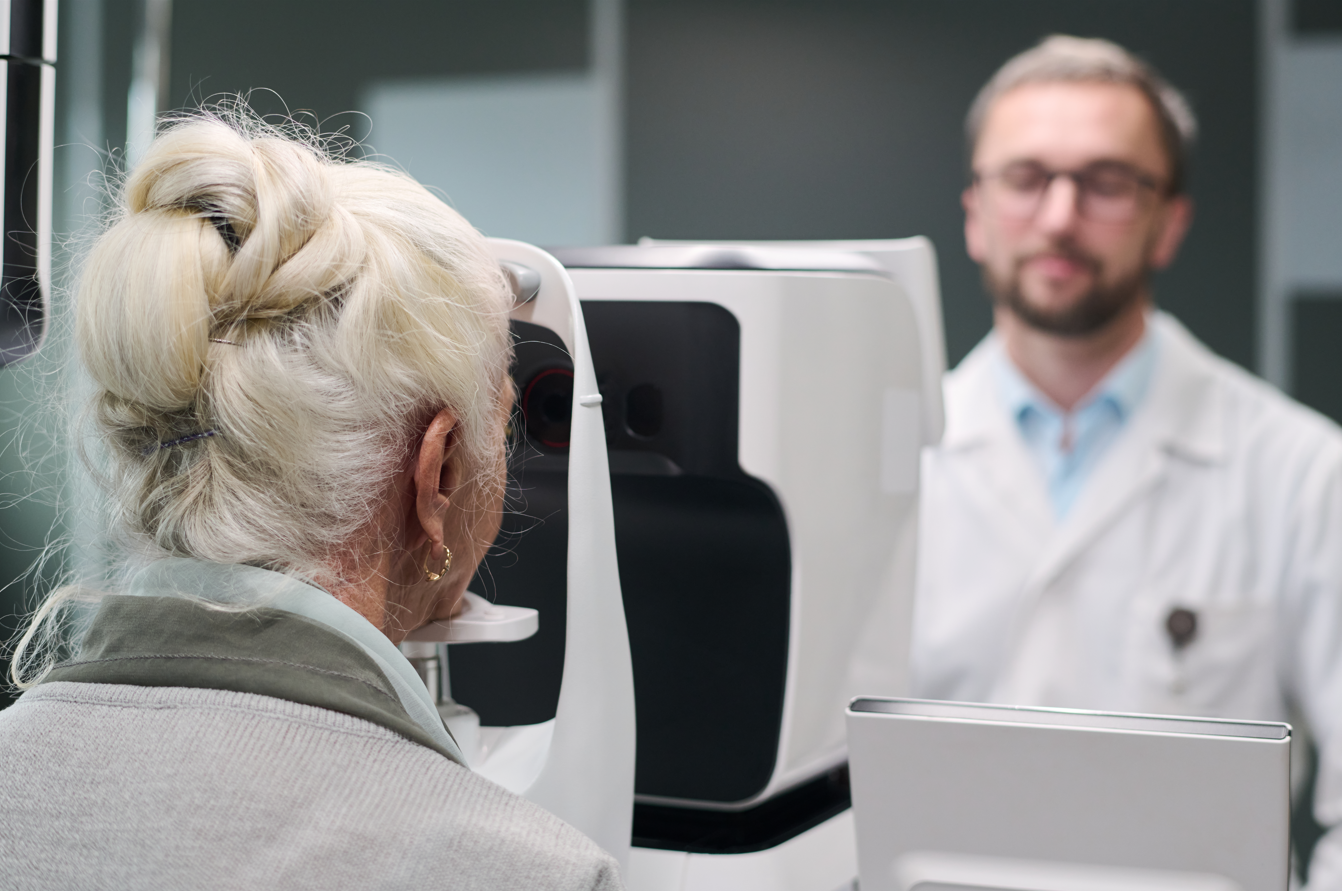
A diabetic retinal screening at Halton Eye Care goes beyond a standard vision check. Dr. Aneesha Jain and Dr. David S. Sooklal use dilated retinal imaging to examine the blood vessels, optic nerve, and macula directly, looking for the microaneurysms, leakage, and abnormal vessel growth that mark different stages of the disease. Dilation widens the pupil so the full retina can be viewed clearly, including the areas at the edges where early changes often begin.
→ A quick tip to remember: a normal vision test does not rule out diabetic eye disease. The two are measuring different things entirely.
Optical coherence tomography imaging may also be used to measure the thickness of retinal layers, which can reveal fluid buildup around the macula before it is visible through a standard exam. Together, these tools let the clinical team catch changes at a stage where treatment options are most effective and vision loss is still preventable.
How Often Screening Should Happen
Screening frequency depends on several factors, including how long someone has had diabetes, how well blood sugar has been controlled, and whether any retinal changes have already been found. Patients with type 1 diabetes are generally screened starting five years after diagnosis, while those with type 2 diabetes should be screened at the time of diagnosis, since the condition may have been present unnoticed for some time already.
From there, most patients with no signs of retinopathy are re-screened annually. Anyone with existing changes, poorly controlled blood sugar, or additional risk factors such as high blood pressure may need to be seen more often, sometimes every three to six months. Pregnancy also increases the need for closer monitoring, since hormonal changes can accelerate existing retinopathy.
Frequently Asked Questions
1. Does diabetic retinopathy always lead to vision loss?
Not if it is caught and managed early. Many patients with mild to moderate retinopathy maintain good vision for years with regular monitoring and treatment when needed.
2. Can diabetic eye damage be reversed?
Some early changes can stabilize once blood sugar is better controlled, but more advanced damage generally cannot be reversed, which is why early detection through screening matters so much.
3. Is a diabetic retinal screening covered separately from a regular eye exam?
Coverage varies by provincial and private insurance plans. Our team can walk through what applies to your specific situation during booking.
Protecting Your Vision Starts With What You Cannot See Yet
The most damaging aspect of diabetic eye disease is also its most treatable feature: it gives clinicians a long window to act before a patient notices anything wrong. Skipping screening because vision feels normal removes that window entirely. Book a diabetic retinal screening with Halton Eye Care in Oakville, Mississauga, Burlington, Milton, or Halton Hills to find out where things stand.
Share This Blog