The Reality of 20/20 Vision: Why You Still Need an OCT Consultation
Halton Eye Care • August 25, 2026
Passing a standard eye chart test often gives patients a false sense of security regarding their ocular health. At Halton Eye Care, we know that seeing clearly at a distance only measures the sharpness of your central vision.
The most serious ocular diseases develop silently in the back of the eye, long before they affect your ability to read letters on a wall. Utilizing advanced diagnostic technology is the only way to accurately confirm that your eyes are truly healthy.
In This Article:
- The Misconception of the Letter Chart
- What We Actually See Under the Surface
- Setting Expectations for Your Consultation
- Frequently Asked Questions
The Misconception of the Letter Chart
Many people assume that if their prescription has not changed, their eyes are perfectly fine. This is a dangerous underestimation of how ocular health works. Conditions affecting the optic nerve or the macula rarely present with sudden blurriness in the early stages. The brain is incredibly adept at filling in small visual gaps, meaning significant cellular damage can occur before you ever notice a symptom.
Relying solely on visual acuity tests is like assuming a car is in perfect condition just because the windshield is clean. Standard tests evaluate visual function, but they do not evaluate the physical integrity of the tissue. We routinely educate our patients about the critical difference between seeing well and having healthy eyes.
→ A quick tip to remember: Glaucoma and diabetic retinopathy often progress without any noticeable changes to your daily vision.
What We Actually See Under the Surface
Optical Coherence Tomography acts as an ultrasound for your eye, but it uses light waves instead of sound to capture cross-sectional images of the retina. This technology allows us to see the distinct layers of retinal tissue and measure their exact thickness. This level of detail is vital for spotting microscopic fluid leaks, nerve fiber thinning, or drusen deposits.
When we view these deep layers, we can identify structural anomalies years before they threaten your sight. This diagnostic capability shifts our approach from reactive symptom management to proactive disease prevention. It provides a baseline that we use to monitor microscopic changes over the course of your life.
This is something clients notice firsthand when they experience the depth of our evaluations.
► Client Experience: My entire family has been going to Dr Jain and Dr Sooklal for over a decade now. They are very meticulous, dedicated and client-centric. They always go above and beyond the call of duty to offer service to their patients. I would recommend them to anyone looking for an optometrist and these are some of the best we have ever come across. (Sid Vittal)
Thorough diagnostic imaging is a core part of that meticulous approach, ensuring nothing is left to chance.
→ From a professional standpoint: A clear OCT scan provides peace of mind that is backed by objective medical data.
Setting Expectations for Your Consultation
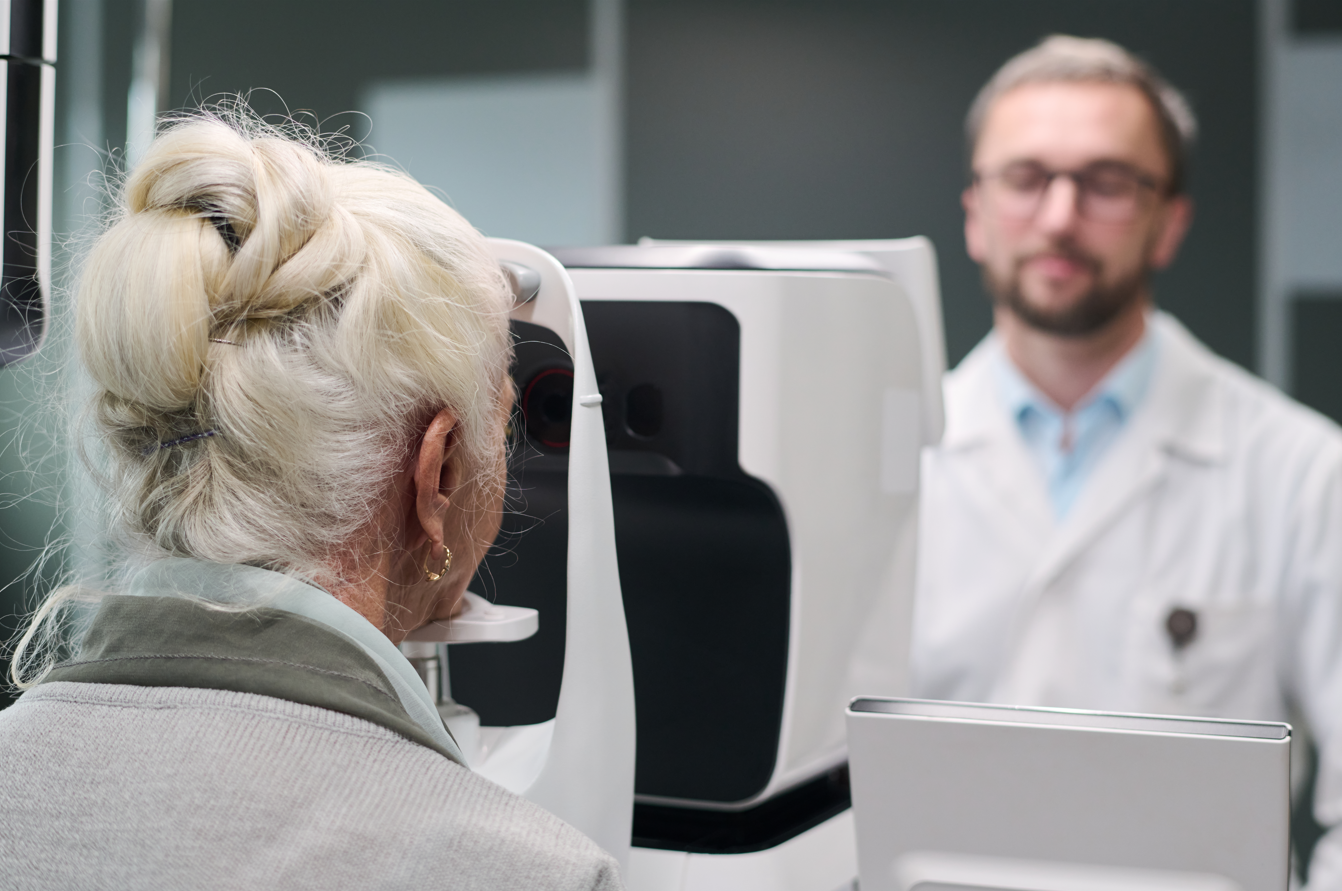
An OCT consultation is swift, completely painless, and requires no physical contact with your eye. You simply look into a lens while the machine scans your retina in a matter of seconds. Following the scan, we review the high-resolution images with you in the exam room, explaining exactly what we are looking at.
This is not a diagnostic test where you wait weeks for results. The real-time data allows us to immediately discuss your ocular health and establish a customized monitoring schedule. Whether we are confirming healthy tissue or identifying an early-stage issue that requires a referral, you leave the clinic with a clear understanding of your status.
→ A quick tip to remember: Baseline scans are most effective when taken while your eyes are still completely healthy.
Frequently Asked Questions
Can You Have 20/20 Vision And Still Have Eye Disease?
Yes, absolutely. Having 20/20 vision strictly means your central visual acuity is sharp. Diseases like glaucoma damage the peripheral vision first, while diabetic retinopathy can cause silent bleeding in the retina. You can easily read the bottom line of an eye chart while actively losing optic nerve tissue.
What Exactly Does An OCT Scan Detect?
An OCT scan detects cellular-level abnormalities in the retina and optic nerve. It is highly effective at identifying macular degeneration, diabetic macular edema, glaucoma, and macular holes. The scan measures the thickness of the nerve fiber layer, which is crucial for early glaucoma diagnosis.
Is An OCT Scan Painful Or Invasive?
The scan is entirely non-invasive and painless. There are no bright flashes of light or puffs of air involved in the process. You simply rest your chin on the machine and look at a target for a few seconds while the instrument captures the digital images.
Booking Your Deep Health Evaluation
Protecting your vision requires looking beyond the standard letter chart. Gathering precise internal data ensures your eyes remain healthy and functional for the long term. Schedule an OCT consultation to gain a true understanding of your ocular health today!
Share This Blog